Southland Tour
|
|
As
we expected we had thoroughly enjoyed the extra time we managed to spend in
Stewart Island. With Fiordland it remains a relatively unvisited wilderness.
Though the weather can be challenging, the cruising itself is not excessively
demanding, so long as you choose your weather correctly. We were sad to head
away, but other travel plans were becoming pressing, so we headed East out of
Foveaux Strait past Nugget Point. |

|
More
than anything we were sad to be leaving behind the flocks of albatross which
we had delighted in throughout our time in the far south. Though there are
albatross to be seen throughout New Zealand waters, they abound in the far
south. To be fair, our next destination, Dunedin, has its share of Royal
Albatross, which breed on the Taiaroa Peninsula, which bounds the southern
side of Otago Harbour. |
|

|
|
|


|
|
After
the isolation and peace of Fiordland and Stewart Island, Otago Harbour was a stark
contrast, with its busy channel and the container port at Port Chalmers,
where the very Scottish ‘kirk’ stands in curious juxtaposition to the huge
cranes. Our
ultimate destination was 20 miles up the Harbour at the Otago Yacht Club in
Dunedin City. The Harbour does not boast a modern marina, but the welcome at
the OYC was warm and the Facilities Manager, Kevin Martin, was extremely
helpful. The
Club has a few alongside berths and pile moorings. Depths in the basin vary
and many areas are less than 2 metres. The Club is conveniently a short bike
into the city centre. A pile mooring was ideal from our point of view as a
place to leave ‘Sunstone’ safely while we were away on our air travels. |

|
|
|


|
To
make the most of the few days which remained before our flights to New York,
we hired a car for a brief land-cruise of Southland. We had a delightful hike
along the Catlins River. As usual the DOC-maintained track was excellent and
the scenery beautiful. We also had a number of sightings of the relatively
rare Yellowhead, which is one of a number of endangered native New Zealand
birds. |
|
|
|


|
Along
the coast at Curio Bay, we took the opportunity of low tide to see the
unusual remains of petrified wood in which the grain was still visible. The
extensive kelp beds nearby were very attractive, but we were very happy that
we didn’t have to anchor anywhere near them! |
|
|
|


|
|
|

|
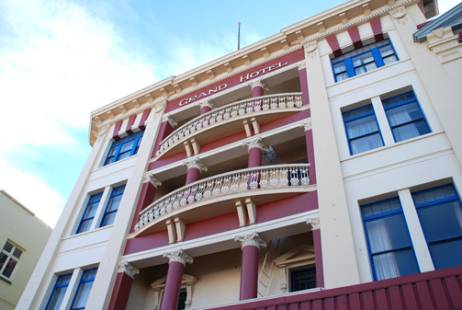
The
Southland towns of Invercargill and Bluff still reflect some of the glories
and prosperity of the early 20th century, though both are now much
reduced in size and wealth from those days. Bluff particularly is a fairly
sleepy backwater, which only comes alive during the crayfishing and oyster seasons.
Thereafter most of the fishing boats based at the harbour head for other
grounds for the rest of the summer. It
was good to have a final view of Stewart Island across Foveaux Strait on a
perfect Southland day. All too often this view would be obscured by rain and
spray in the westerly gales and storms that regularly thunder through the
Strait. |
|

|
As
this panoramic view from the top of Bluff Hill shows, Bluff Harbour itself is
a wonderful natural harbour and is still the site of one of New Zealand’s
major industrial installations, namely the aluminium smelter on the point
opposite the town. This huge facility has its own power station and docks.
Unfortunately its siting does little to benefit the town as access to it by
road involves a trip of many kilometres. Thus most of the workers at the
plant are drawn from Invercargill. |
|
|

|
|
One
of the primary reasons for our visit to Bluff was to meet Meri Leask in
person for the first time. We had spoken to Meri many times on the radio, as
she runs Bluff Fishermen’s Radio as a service both to the local fishermen and
to visiting yachts. Meri holds two scheds per day during which she provides
the Metservice marine weather forecasts and vessels can check in with their
positions and pass on weather information. Meri is often the first to pick up
distress calls in South Island waters and she has been instrumental in
assisting with several major rescues. Both Meri and Bluff Fishermen’s Radio
have become national institutions |

Next |