Nelson, Hikes and
Haul-Out
|
Two days after Tom arrived back in Auckland, we were away in ‘Sunstone’, headed for Nelson for the winter. We had a fast run up to North Cape and then the wind eased giving us light head winds for most of the trip down the West Coast. However, we were in a hurry and so motor-sailed for much of the time, desperate to get into Nelson to see the Super-14 Rugby final. The timing was close, but we made it by an hour, arriving just after six, hiking quickly into town to the nearest bar with Sky TV and finding seats just in time for kick-off. As
in Hobart and Auckland, we then had the ‘Hello, you’re back again’
experience, despite having last been in Nelson nearly eight years before.
However, we had stayed in contact with Peter Faulkner, former Commodore of
the Tasman Bay Cruising Club (TBCC). It seemed that Peter had spent most of
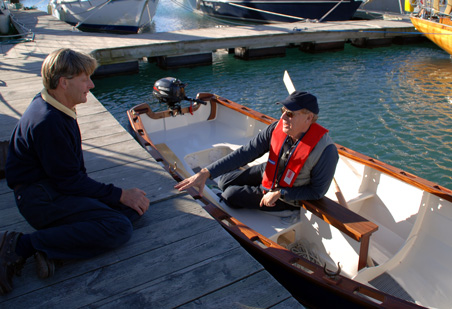
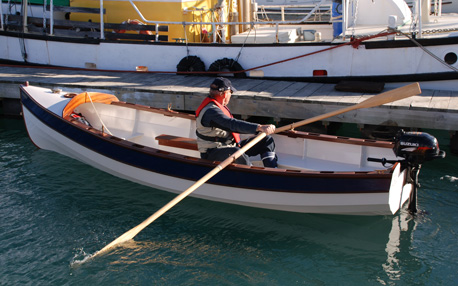
the time we were away making a perfectionist job of building his decked
skiff, ‘Ventura’, which had been formally launched the afternoon of our
arrival. We
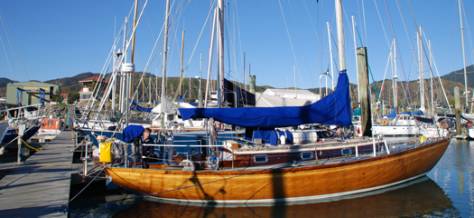
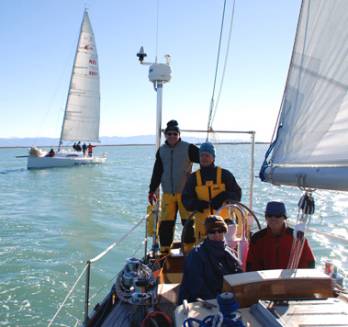
soon settled back into Nelson marina and even got a quick race fix with the
TBCC, taking with us Peter and the OCC Port Officers for Nelson, Graham and
Anne Evans. |
|
|
|
|
|
|
|
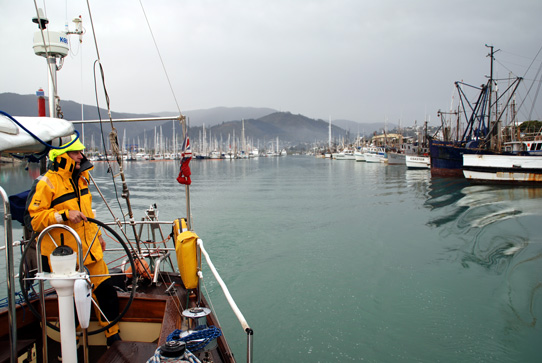
Nelson’s
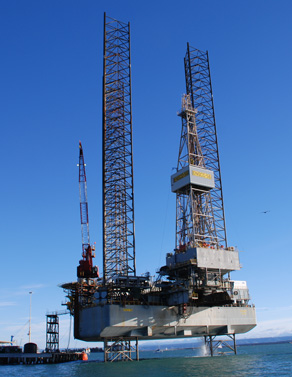
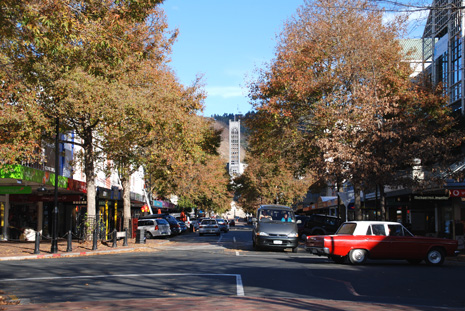
CBD is both attractive and functional. As a regional centre, the town has
more services than you would expect for its population. Like all ports, it
has its scenic drawbacks, but with its backdrop of wooded hills and more
distant snow-capped mountains of the western ranges, Nelson is an pleasant
spot. It also has a growing community of ‘grounded cruisers’ who have
discovered its attractions. |
|
|
|
|
|

|
Once
‘Sunstone’ was settled in her berth, we hopped aboard a plane to head back to
Auckland in order to collect our car. At least that was Tom’s motivation –
Vicky’s were rather more ulterior, having planned a major expedition on the
way back south. Fortunately our morning flight was in bright sunshine, giving
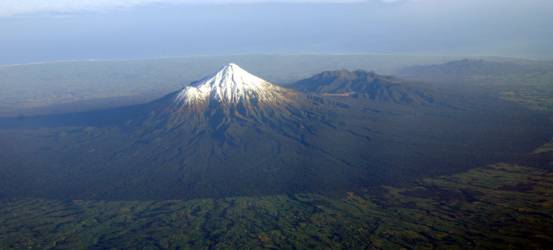
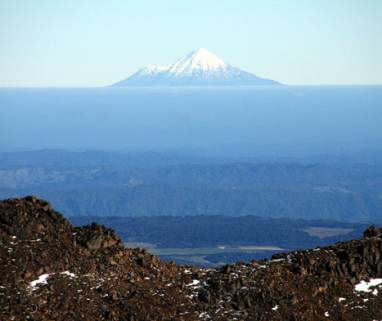
a spectacular view of Mount Taranaki in the SW corner of the North Island. |
|
|
|
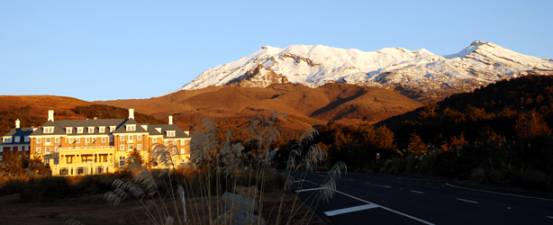
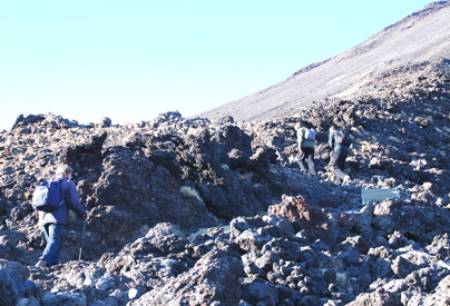
A longish day’s drive saw us to Whakapapa with its famous ‘Chateau’, at which we did not stay. We booked in by phone with a company to bus us out to the start of the Tongariro Alpine Crossing – and collect us from the other end. |
|
|
|
|
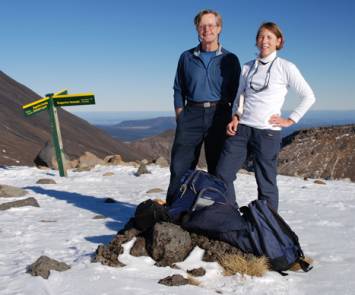
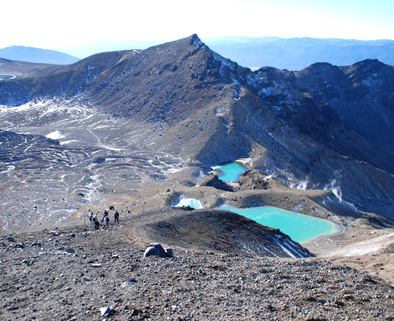
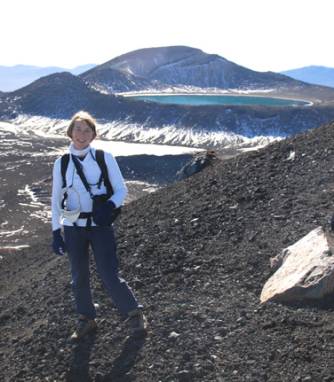
After
a cold, pre-dawn start, we were very lucky with the weather, which warmed
rapidly and gave Vicky all the sun she could want for innumerable photo ops.
In fact, the air was so clear that we had another view of Mt. Taranaki 50-60
miles away. Though
the crossing doesn’t involve extreme height there are some steep slopes and
the whole trip is over volcanic rock – the original source of which can be
seen gently steaming not far from the track. Fortunately, the snow and ice of
the previous week had receded and there was only one difficult stretch of icy
patches on a steep slope, in the entire walk. The one scree slope was far
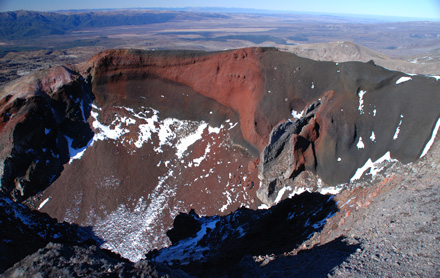
less treacherous than Mt. Marathon at Seward in Alaska. Though bleak, some of
the scenery was quite spectacular, particularly the Red Crater and the
Emerald Lakes. |
|
|
|
|
|
|
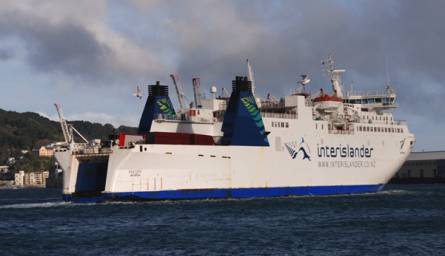
Quite
apart from aching joints and muscles, the next day brought us back to sea
level for our first passage on the Cook Strait ferry. Though delays brought on
by bad weather a few days earlier spoiled Vicky’s plan to go into the Tory
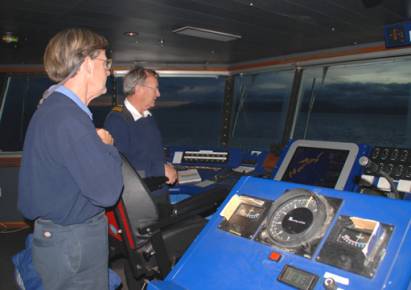
Channel in daylight we did have some compensation when Vicky finagled an
invitation to visit the bridge, where electronics and joy sticks seemed to be
bearing the burden of command and control. |
|
|
|
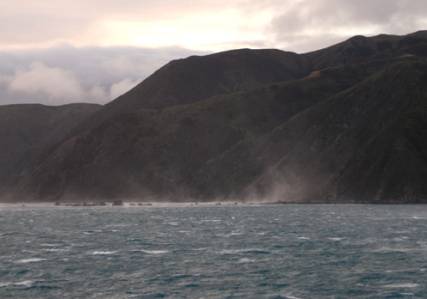
These
ferries operate across a body of water, which, though narrow, has a deserved
reputation for appalling weather. Our passage was in moderate conditions, with
only low swell and about 40 knots of wind, with occasional higher gusts, as
can be seen by the spray raised from sea. The ferries continue to operate in
much worse conditions, though heavy southeasterly swells tend to cause
cancellations. |
|
|
|
|
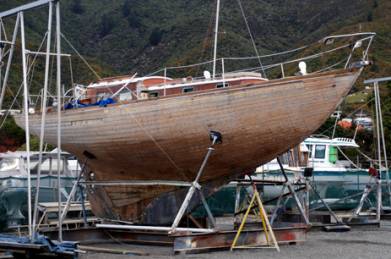
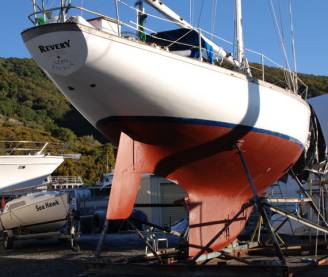
Though
the South Island ferry terminal at Picton is only two or three hours drive
from Nelson, we decided to stay the night and were happy that we did as it
gave us a chance to see ‘Heron’, another S&S in the process of
restoration. On a later visit to Picton we also had the opportunity to view
‘Revery’, Chris Beech and Ron Melton’s S&S, whose hull form is very
similar to the original Swan 43, apart from the counter stern. |
|
|
|
|
|
|
|
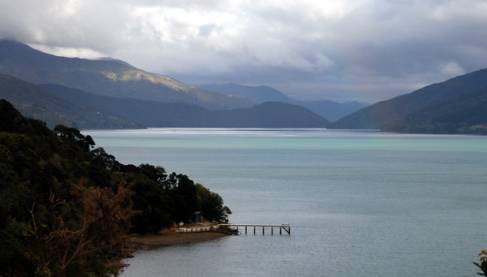
We
wound our way back to Nelson through the Marlborough Sounds along roads which
must hold records for the number of bends per kilometre. Despite the overcast
the views were striking – on those rare occasions that it was safe to take
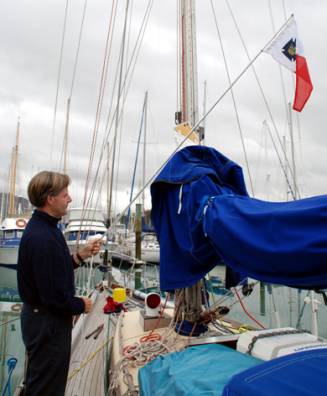
one’s eyes from the road. Back in Nelson, having had the honour of election
to the Royal Cruising Club (RCC) and having actually found a pole long enough
to clear the masthead clutter, we proudly hoisted the Club’s burgee. |
|
|
|
|
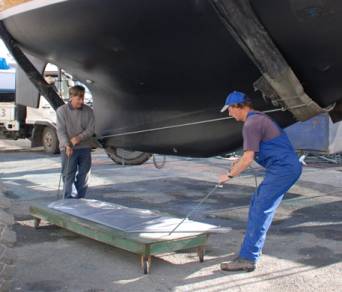
One
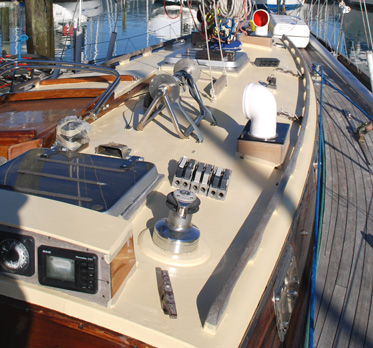
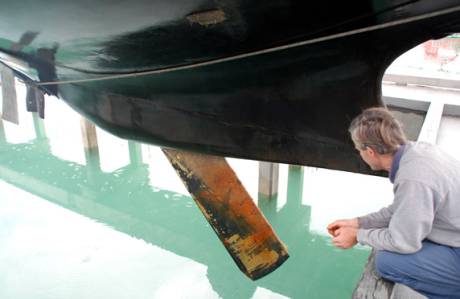
of the major reasons for heading to Nelson was to give ‘Sunstone’ some TLC,
both high and low. While the weather held we painted the coachroof deck, as
well as several other bits of more minor on-deck refurbishment. Having last
fully lowered and refurbished the centreboard in 2000, we expected it to
require some work, which it did, so we dropped it out when we hauled out. |
|
|
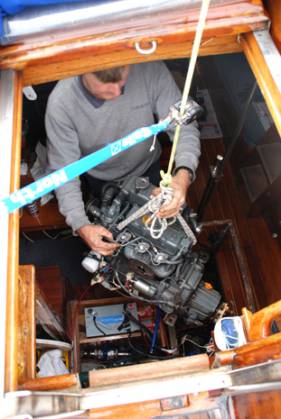
Our
faithful Yanmar 3GM30 has been a wonderful engine. Though there were no signs
that it required any major work, we decided to haul it out for some external
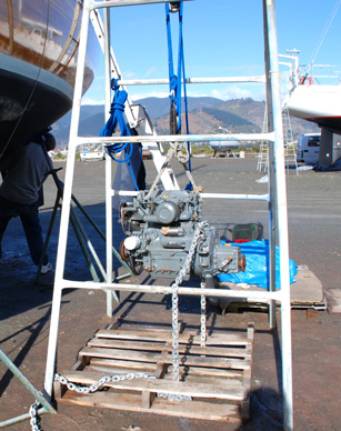
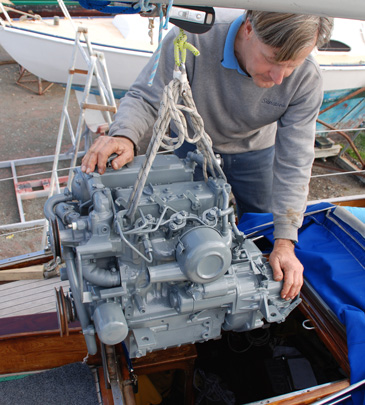
refurbishment while we also took care of some other ‘issues’. Strung up from
a convenient scaffold, we gave the engine several coats of paint. |
|
|
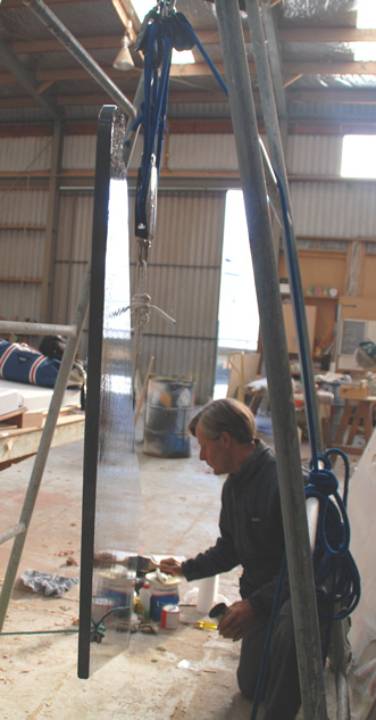
Once
the centreboard was sandblasted and had minor corrosion filled, we painted it
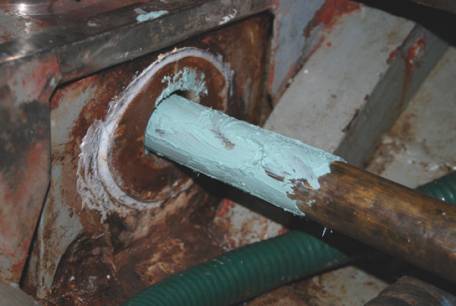
ready to go back in before launching. We knew that the shaft log required
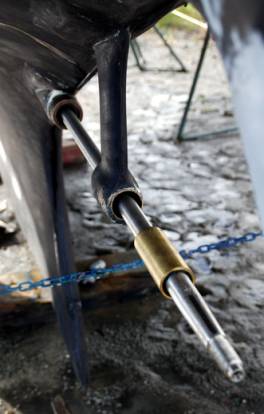
some minor refurbishment and so pulled and then refitted the shaft tube,
which was still in good condition. Having pulled the shaft, it was clearly
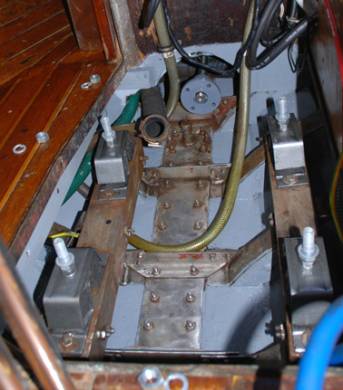
worn enough to require replacement, while we already knew that the engine
mounts were past their ‘use by’ date. As usual with the engine out, the bilge
beneath received the attention of Vicky’s paint brush. |
|
|
|
|
|
|
In
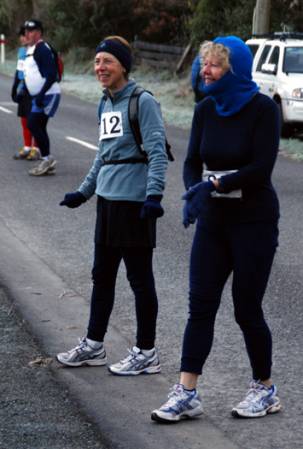
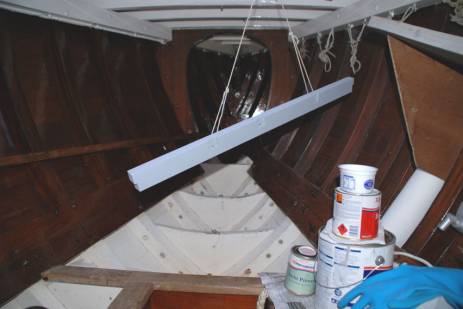
the meantime, Vicky was also busy re-varnishing and painting the entire
forecabin, only taking breaks to train for an arduous, and cold,
half-marathon in the hills behind the town, which she completed just within her
target time, 2:14:23. Fortunately,
virtually all the work we had planned was inside the boat. We had come to
Nelson in anticipation of the dry, cool winter weather for which it is well
known. Instead we had intermittent rainy spells which locals declared to be
giving the worst winter in decades – though it was still far drier than
anywhere in the North Island. |
|
|
|
|
|
Looking
almost like new the engine was hoisted back up on the main halyard and directed
by a cat’s cradle of lines and blocks back into its hole in the bilge. That
of course is the easy part. Getting the alignment right and ensuring that all
the connections of fuel water and electrics are correct is the real work. |
|
|
|
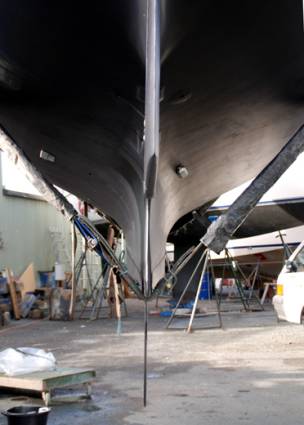
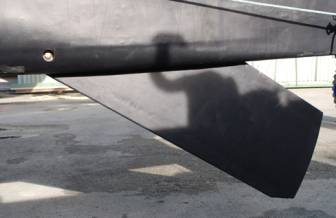
With
‘Sunstone’s’ bottom once again race-ready, we hoisted the refurbished
centreboard back into place – though that was a great deal easier said than
done. Looking
at ‘Sunstone’ from astern with the board down it is interesting to see how
little drag there must be from the plate and rudder. The keel is a different
matter! |
|
|
|
|
|
|
|
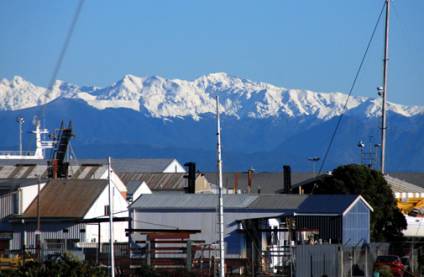
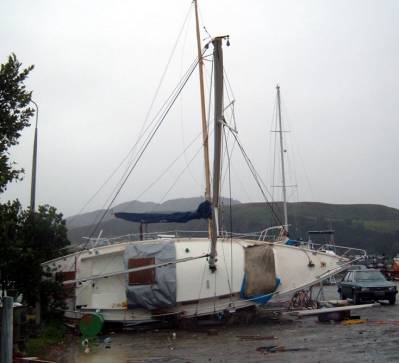
These
two photographs give some ideas of contrasts of weather in Nelson this
winter, with many of the clear crisp days we had expected, but also a storm, which
sent 60 knot gusts through the marina and knocked a boat over in the yard.
Fortunately we were back in the water by this time. |
|
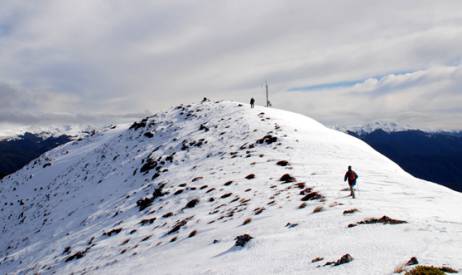
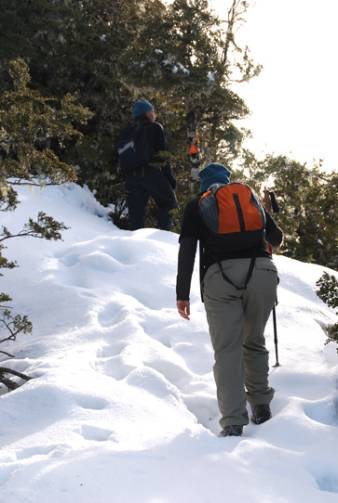
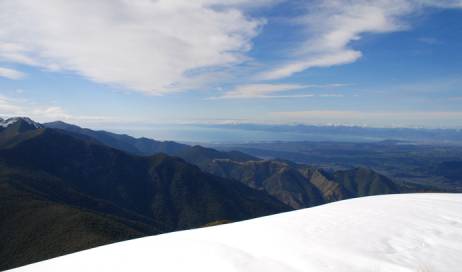
Once
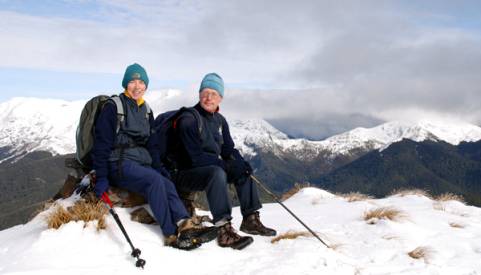
‘Sunstone’ was back in the water, Vicky couldn’t resist the call of the mountains,
so off we went with Anne Evans to climb the Lodestone in the ranges to the
west. Much of the steep climb is through typical New Zealand bush, but above
the tree line there was a good deal of snow, fortunately none of it fresh,
giving a wintry hike to the summit. From there were contrasting views of the
expanse of Tasman Bay to the east and the even higher peaks of the ranges to
the west. |
|
|
|
|
|
|
|
With
the time for us to head back to Auckland looming, Vicky was determined to get
up to see Farewell Spit, Golden Bay – as well as all points of interest round
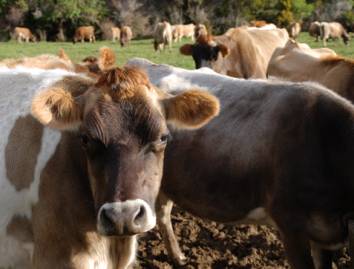
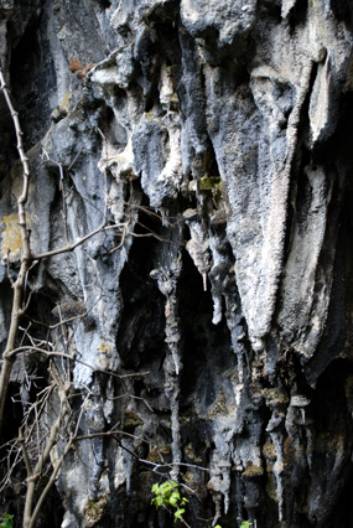
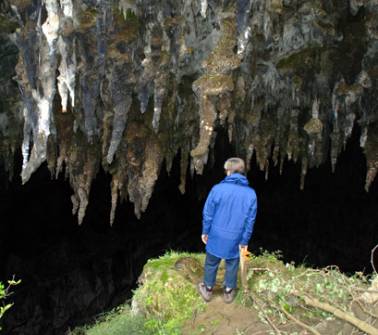
and about. Among these was the cave at Rawhiti. Of course to reach the cave
involved a hike and close encounters with a dairy herd. However, undeterred
by this or the intermittent rain we reached the remarkable stalactite
formations of the caves. The cows, wisely remained in their paddock. |
|
|
|
|
|
|
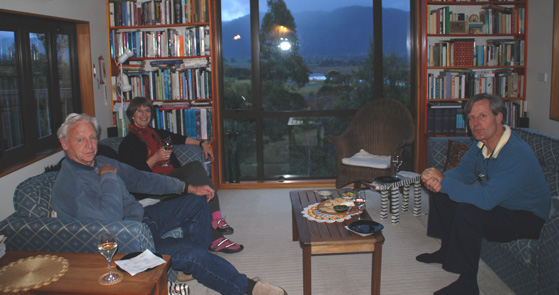
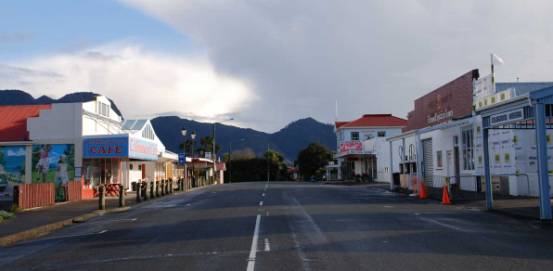
We
took the opportunity of our visit to Collingwood in Golden Bay to stay with
Peter and Penny Foster. We had remained in contact with Peter, who edited the
excellent guides for Fiordland and Stewart Island. After years of intrepid
cruising of the far south, Peter made the brave decision to sell his faithful
yacht, ‘Reliance’, and give up sailing altogether, rather than merely potter.
Instead, he and Penny have thrown themselves into the life of the small and
somewhat eccentric community at Collingwood, which is an interesting mix of
dairy farmers and ‘alternative-lifestylers’. We
were admiring and somewhat envious of the house which they have built to
Penny’s design, perched on a hill overlooking Collingwood and the estuary –
and filled with fascinating books. After
a pleasant evening with Peter and Penny we moved to a motel so that we could
get unaccustomed evening fixes of sports television. This gave us the chance
to watch some of the New Zealand rowers gain medals and more importantly to
see the All Blacks crush the Springboks 19 – 0. |
|
|
|
|
|
|
|
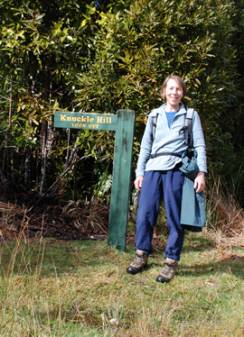
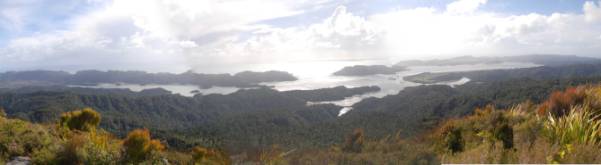
Taking
a window in the weather, we headed for the back roads leading to the
northwest coast and Wanganui Inlet. An hour and half’s hiking up an old logging
track, battling the gusty westerly wind, got us to the top of Knuckle hill,
with a panoramic view of the Inlet. |
|
|
The
following day we joined a minibus tour for the drive out on Farewell Spit. To
protect the Spit, very little of it is open to public unless you join a tour.
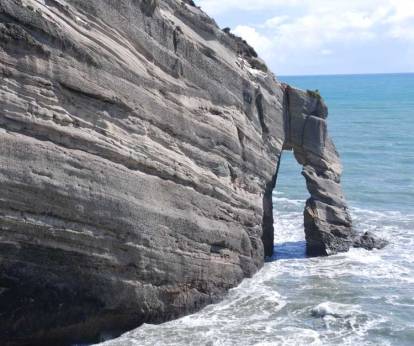
Oddly, Cape Farewell with its stone arch is actually at the inland end of the
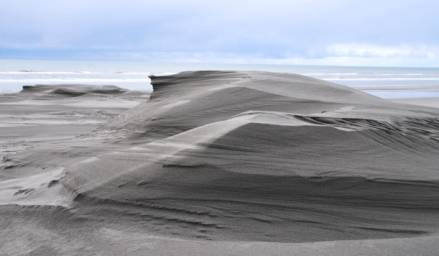
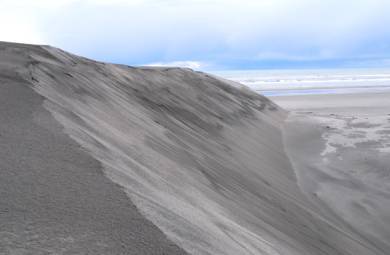
Spit. As
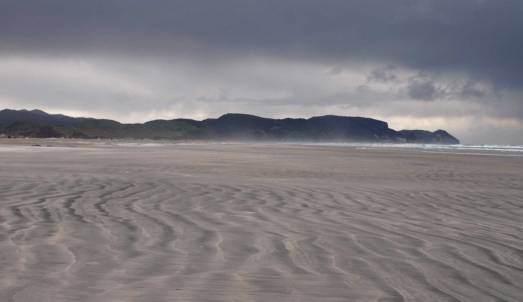
you might expect from a 20 mile long sandspit, much of the scenery is very
similar with few distinct points of interest. However, it does have its
attractions in both the sand waves of the tidal flats and the
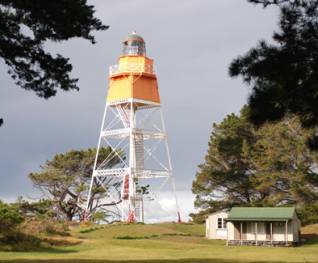
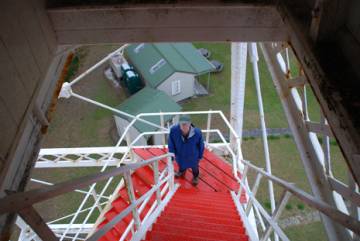
crescent-shaped, shifting dunes. And then there is the surprise at the end,
with lighthouse almost hidden among a grove of pine trees, the latter grown
by the lighthouse-keepers (no longer in residence), to give some protection
from the constant wind. |
|
|
|
|
As
might be expected from such an isolated spot there are many ‘finds’ to be had
in the sand, mostly of a natural kind. There are strandings of whales and
since the currents which form and regularly lengthen the Spit come from
further down the west coast, they bring their own burden to drop on the
beach. Even in our short walk we found a cow’s skull and the jaw of some
small mammal. |
|
|
|
|
|
|
|
|
|
|
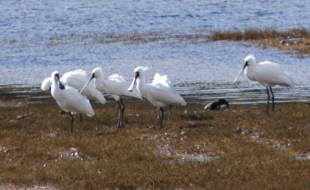
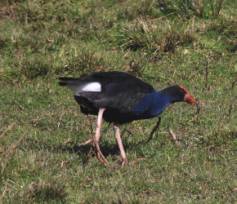
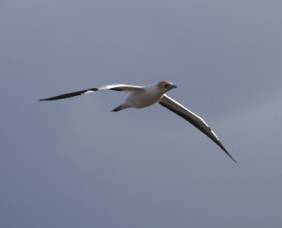
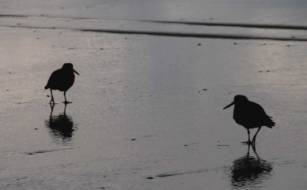
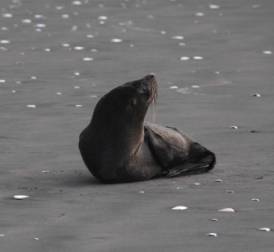
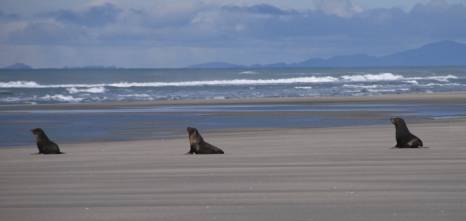
There
is a huge gannet colony on the Spit as well as the usual oystercatchers,
while the wet-lands at the base of the Spit have spoonbills and the moor-hen-like
pukeko. Fur seals which were once hunted almost to extinction, are now very
common throughout New Zealand waters and enjoy basking on the sands between
high tides. |
|
|
|
|
|
|
|
|
|
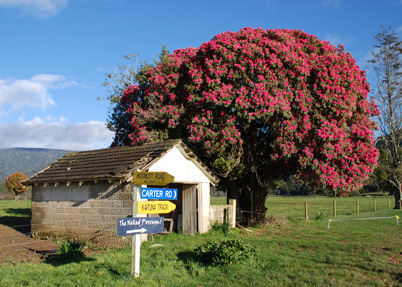
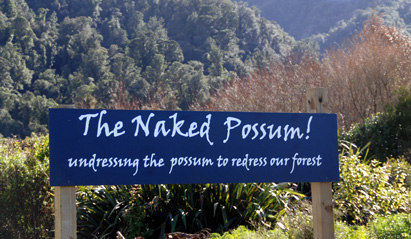
Our final hike in Golden Bay took us to the eastern end of the Kaituna Track, where the Naked Possum Café and Tannery provides an excellent example of the alternative lifestyle common to Golden Bay. The use of possum fur and leather is generally applauded in New Zealand as the possums are a fast breeding pest, which destroys the forest habitat and as an introduced species has no natural enemies. Our
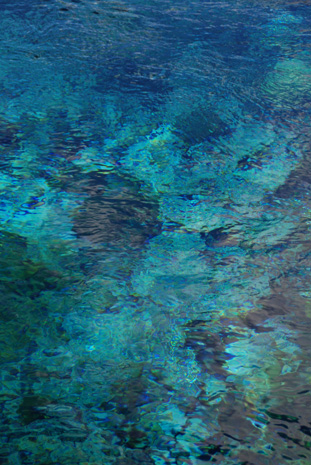
final stop on the way back to Nelson was at the Pupu Springs. These natural
springs produce huge quantities of the most beautifully clear water, bubbling
up in a basin whose colours rival those of the most perfect coral reef. |
|
|
|
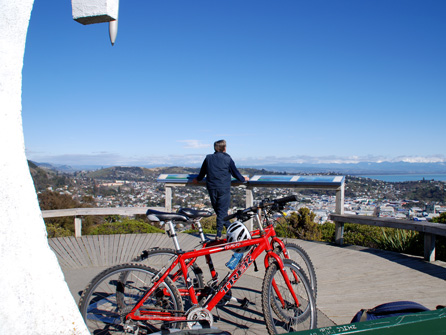
Appropriately
our final foray into the hills behind Nelson was to the ‘Centre of New Zealand’,
theoretically the geographical centre of the country. The plan was to bike up
and back, but the track up was so steep that we walked much of it, remounting
once the slope was shallower and free-wheeling back down. We
enjoyed our winter in Nelson eight years ago, despite the work and discomfort
of redoing our teak decks. This winter was a much more leisurely affair and
even more enjoyable. We got to know more local people as well as Graham and
Anne, Lane and Kay, Willem and Corri, Maurice and Katie among the very
interesting community of ‘grounded’ cruisers in Nelson. We
have been looking around New Zealand for places where we might eventually
settle and our winter in Nelson confirmed that it is very high on our list of
preferences. |
|
Next |